- AI with Alec Newsletter
- Posts
- Newsletter #42: After 5 Years, Palantir is Still Explaining What They Do. Here's Why That Matters For Closing Your AI Execution Gap.
Newsletter #42: After 5 Years, Palantir is Still Explaining What They Do. Here's Why That Matters For Closing Your AI Execution Gap.

Alec Coughlin
October 26, 2025
As successful as Palantir Technologies has been, there’s a running joke about how few people actually understand what they do.
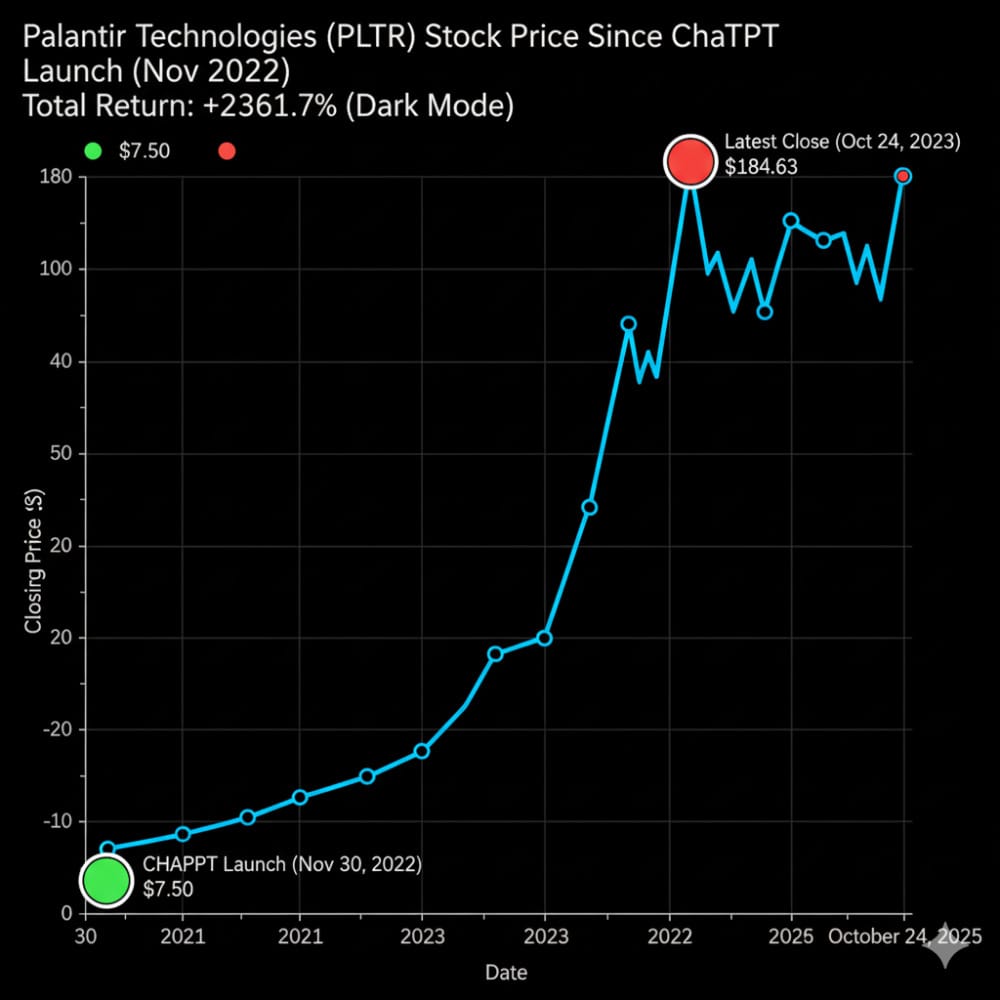
Looks like the joke wasn’t lost on Palantir.
Excerpts from their 11.11.20 blog post - “Palantir is Not a Data Company (Palantir Explained, #1)":
“Palantir is a software company.”
“We build digital infrastructure for data-driven operations and decision-making. Our products serve as the connective tissue between an organization’s data, its analytics capabilities, and operational execution."
"Palantir’s platforms tie these together by bringing the right data to the people who need it, allowing them to take data-driven decisions, conduct sophisticated analytics, and refine operations through feedback. We license this software to organizations, who receive secure and unique instances of our platforms in which to conduct their own work on their own data.”
“This infrastructure helps organizations bring the right data together at the right time to answer complex questions and make intelligent decisions. This is particularly valuable when existing systems are fragmented, and essential information is held in silos that can’t communicate with each other.”
Fast forward almost 5 years later and, well, the same joke still isn’t lost on Palantir…
Excerpts from their 06.06.25 blog post - “Palantir is Still Not a Data Company (Palantir Explained, #7)":
“Palantir is a software company.”
“Unlike many technology companies, our business model is not based on monetizing personal data. Instead, we develop and license software platforms that enable our customers to integrate and analyze their own data assets to make better decisions.”
“We make digital infrastructure that enables organizations to operate in complex data environments. We help our customers — across the public, private, and non-profit sectors — overcome common challenges associated with fractured data landscapes, in which their data is split across different systems and formats.”
“Our software provides our customers with the capabilities to integrate those sources into a common platform in which they can build more effective data management, analytics, and operations. Many of our customers also use our platforms to build or deploy AI tools to further enhance their operations in responsible, reliable, and impactful ways.”
So what?
Palantir’s success and valuation reflects how far enterprise AI technology capabilities have raced ahead of the implementation by the vast majority of enterprises.
While there are a lot of obvious and less obvious explanations for the execution gaps, I’m not going to focus on any of them.
Instead, I’m going to make 3 pound the table recommendations on how to start closing the AI execution gap, supported by excerpts from two excellent research reports from Snowflake and Databricks.
*"The AI Maturity Model: Evaluating Readiness for AI Agents" by Databricks; "Redefining data engineering in the age of AI" by Snowflake + MIT Technology Review
1: Set your north star goal for human + machine collaboration
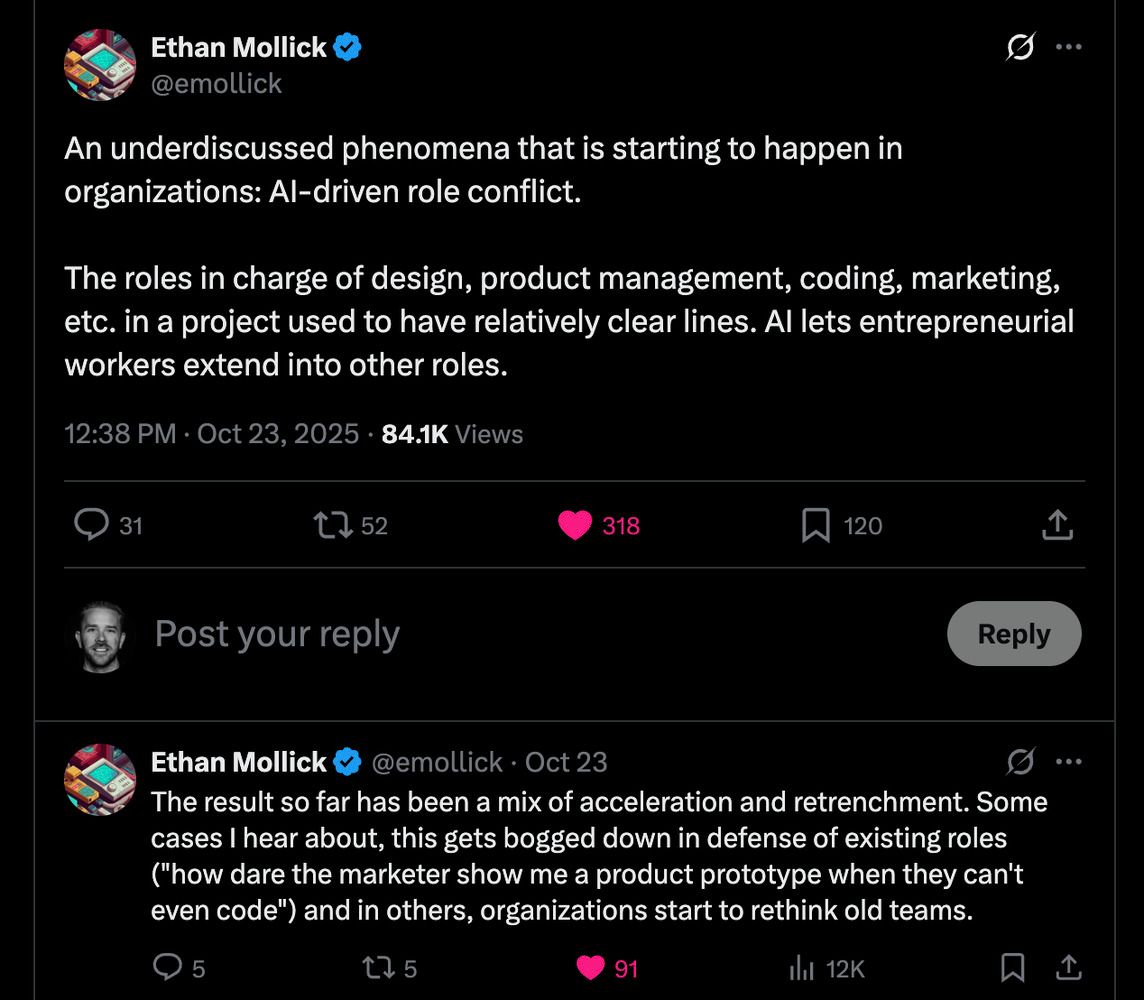
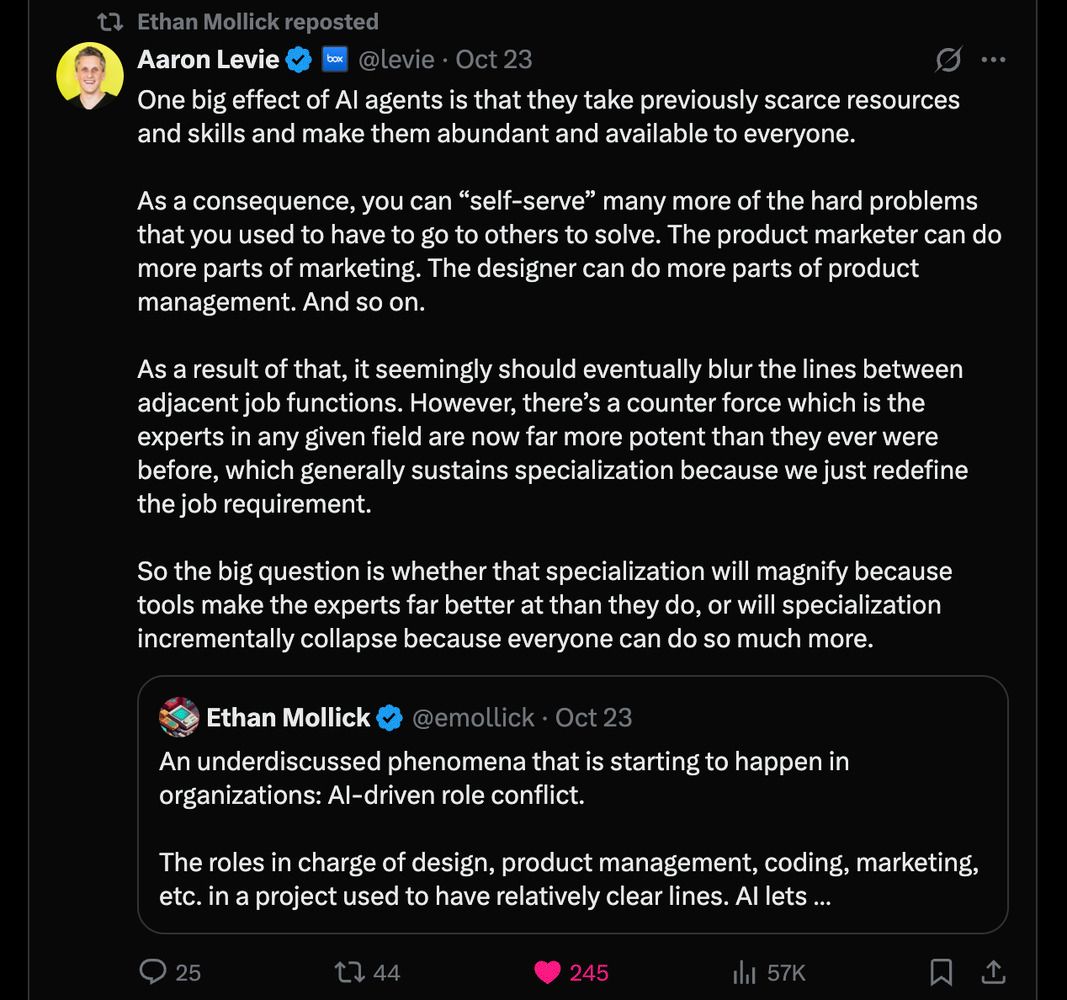
2: Get on your front foot around AI blurring the lines between knowledge worker roles
3: Narrow your AI scope, solve meaningful problems + unlock the magic of compounding
1: Set your north star goal for human + machine collaboration
The potential for AI agents to augment human workflows isn’t up for debate anymore.
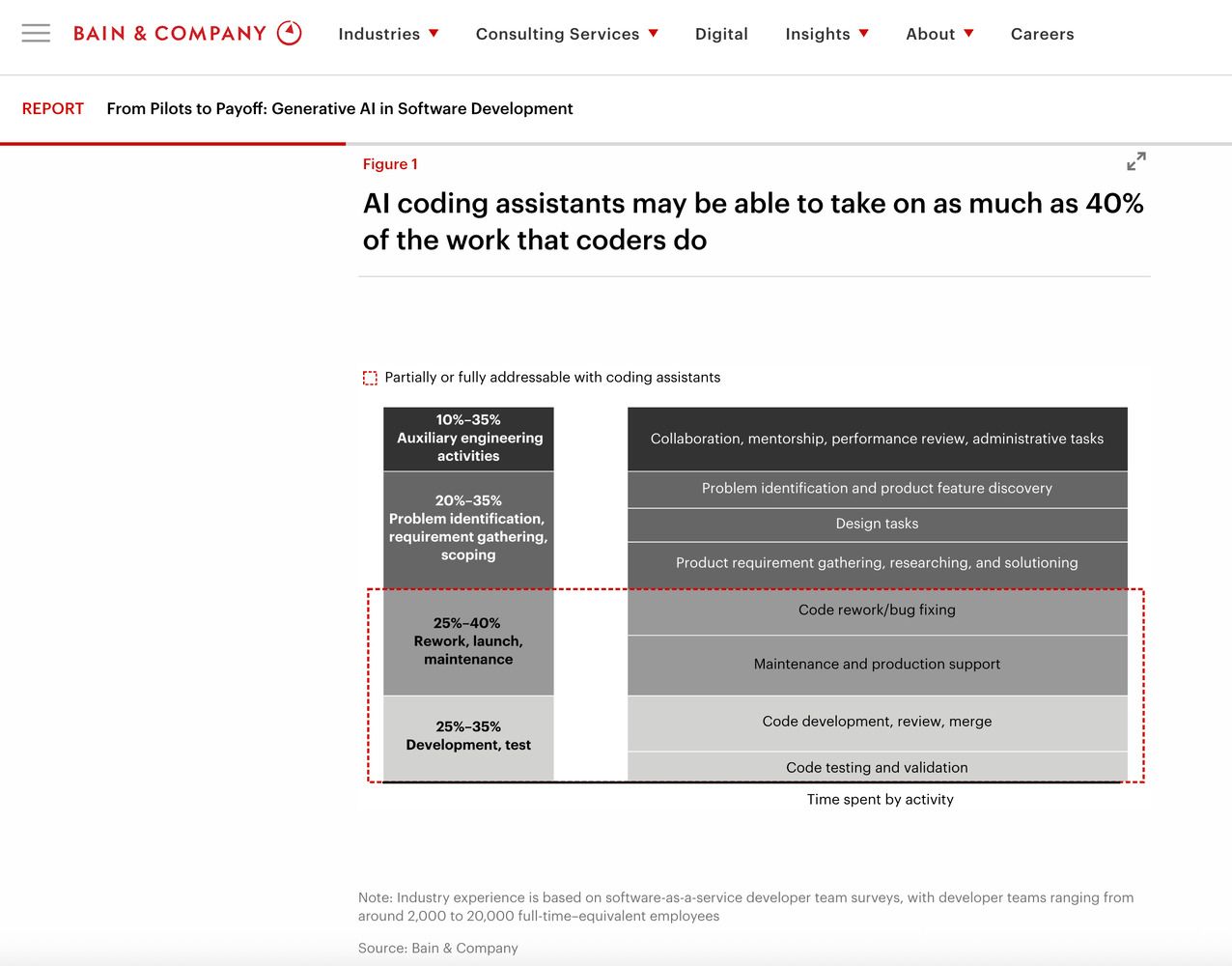
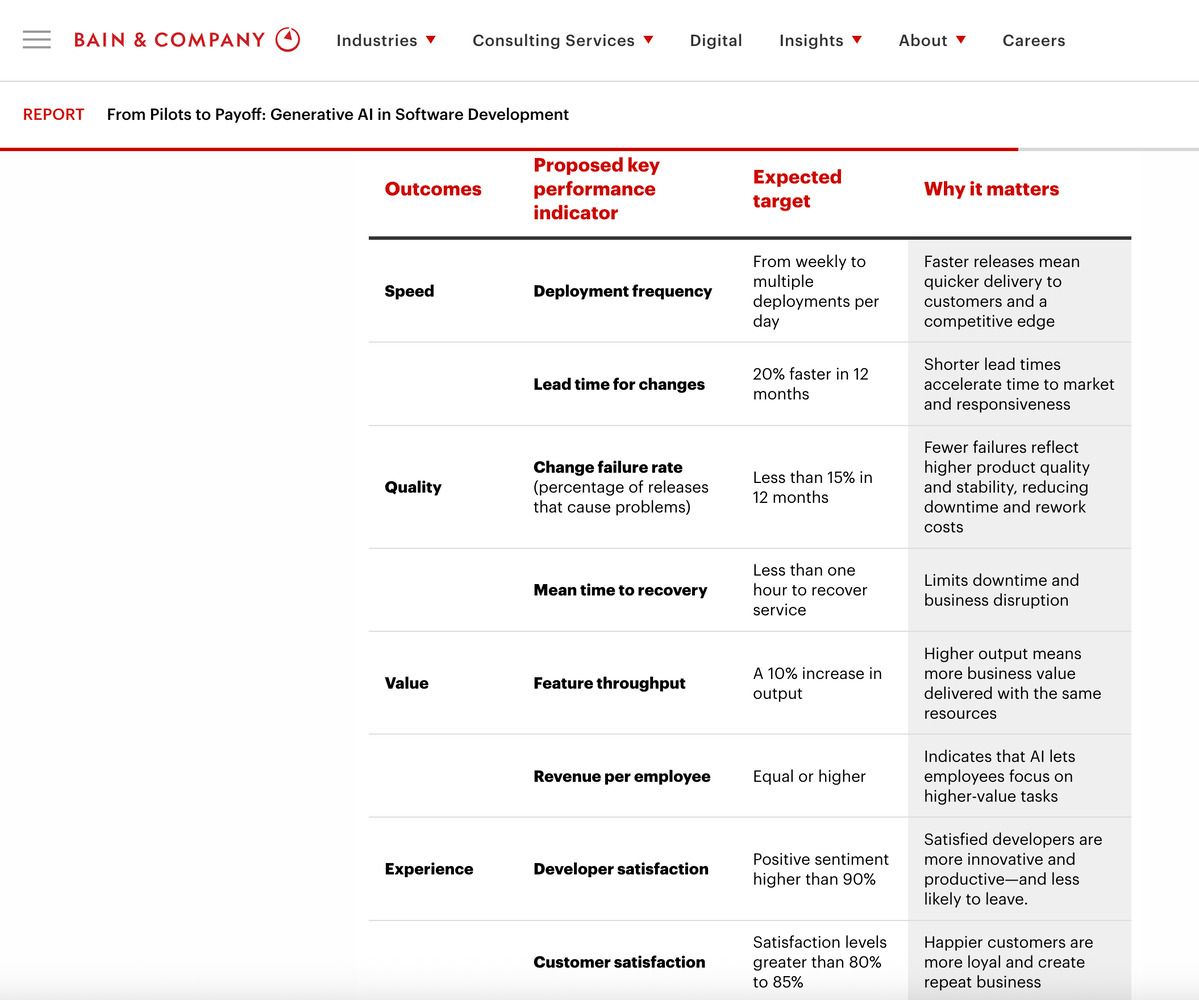
Look at engineering: AI coding assistants are already handling 25-40% of development work. As intelligent systems mature, expect similar transformation across every knowledge worker role.
“Only 22% of organizations say their current architecture is fully capable of supporting the unique demands of AI workloads, and just 23% say their current architecture fully integrates AI applications to relevant business data. Economist Impact” (Databricks)
Based on Walmart's “four ‘super agents’, which essentially act as managers that route tasks to each more specialized agent” and their recent OpenAI partnership, safe to say they’re in the 23%.
“Over half of the surveyed organizations (54%) expect to begin deploying agentic AI within the next year (20% have already done so).” (Snowflake / MIT)
As Andrej Karpathy would say - “I love the Iron Man suit analogy. It’s both an augmentation (Tony Stark can drive it) and an agent (can fly around autonomously). We want both, but at this stage with fallible LLMs, it’s less Iron Man robots and more Iron Man suits.”
2: Get on your front foot around AI blurring the lines between knowledge worker roles.
As intelligent systems continue to evolve rapidly, they will empower cross-functional teams with 5-10x the impact previously possible.
Traditional, siloed roles and operating models will give way to more integrated and productive models where those closest to “the work” will be empowered in ways that will mimic the way engineers are today.
Consider what’s already happening with data engineers.
“The role of the data engineer is expanding. They’re architects, foundation-setters, orchestrators, and so much more. Simply put: They are the operational lifeblood of any data-driven organization.” (Snowflake / MIT)
“Nevertheless, these findings provide a clear indication of an expanding data engineer role."
'"Some data engineers are starting to think about business problems that need to be solved,' says Child. 'They’re asking, ‘Where should we be investing resources? What should these different agents focus on?’"
“'Over time, the data engineer role will shift from writing code for all pipelines toward managing the infrastructure that these are running in, orchestrating across a lot of these, and setting the rules and tests to make sure the right data is coming in,' says Child."
"Jyoti maintains that the data engineer and data architect roles will converge, and she sees that occurring now at a handful of organizations. 'Data engineers need to become fluent in AI. That will help them grow into the roles of system or enterprise Architects.' (Snowflake / MIT)
“Some data engineers worry that AI will automate their jobs away."
"While AI may indeed automate away some of what they currently do, data engineering jobs are likely safe for the foreseeable future. After all, there will always be a need for problem-solving around data. AI is also giving data engineers a valuable opportunity to grow.” (Snowflake / MIT)
Important to remember jobs are bundles of tasks. AI doesn’t automate jobs, AI automates tasks.
If you have the time, please listen to Aaron Levie and Dan Shipper on Dan’s AI&I podcast.
Outstanding perspective from Aaron, one of the clearest enterprise AI “thinkers and doers” in the space.
“The respondents expect the change to accelerate: two years from now, they believe the ratio of time spent on AI to that on other activities will almost be the reverse of today—61% to 39% in favor of AI (see Figure 3).” (Snowflake / MIT)
It's important to get ahead of this because if not, it will likely get messier before it gets cleaner.
3: Narrow your AI scope, solve meaningful problems + unlock the magic of compounding.
There are many ways to say this but when the enterprise AI technology capabilities have raced so far ahead of most company’s implementation, it can be easy to fall into the trap of overthinking which direction to go first.
Yes, there’s healthy tension between launching pilots and ensuring they reach production at scale.
But I’m a big believer in this: scope narrowly, solve meaningfully, optimize for execution velocity.
Generating outcomes folks can get excited about and rally resources behind as well as “learning” (not failing) fast.
Crawl, walk and run style.
“At early maturity stages, organizations may lack a structured approach to AI adoption, experimenting with one-off GenAI applications without a clear link to business impact."
"These early efforts are often driven by technical curiosity rather than strategic alignment, leading to scattered projects with limited scalability."
"However, as organizations develop AI maturity, they introduce systematic frameworks for evaluating, prioritizing and measuring AI initiatives, ensuring that every use case aligns with core business goals, enhances operational efficiency or creates new revenue opportunities.” (Databricks)
“At the highest level of maturity, AI is embedded across business functions, applications and customer interactions, creating an intelligent enterprise where AI agents autonomously optimize workflows, enhance decision-making and drive continuous innovation. Organizations don’t just use AI to support existing processes — they reimagine entire business models around AI capabilities.” (Databricks)
Palantir’s valuation says the market is all in on intelligent operating systems but the fact that they’re still explaining what they do reinforces that most enterprises aren’t there just yet.
The question isn’t whether intelligent systems will reshape knowledge work, engineering teams have already proved that.
The question is whether you’ll be in the 23% with architectures ready for AI workloads, or explaining five years from now why you’re still trying to figure it out?
Time to close the AI execution gap.
You’ve got this.