- AI with Alec Newsletter
- Posts
- AIWA "The One Thing" #18: Could Tacnode be the Next Databricks?
AIWA "The One Thing" #18: Could Tacnode be the Next Databricks?

Alec Coughlin
May 10, 2026
Yes.
Imagine the world before writing. Before books. People had to learn everything from scratch.
Thanks to writing, thanks to books, knowledge compounded. Everyone could learn from each other.
Today's AI agents don't yet have their version of writing or books. They operate in isolation, without the shared understanding or context of what previous agents and humans have experienced.
They have to start over. Learn everything from scratch.
This is the context gap. Tacnode exists to solve the context gap.
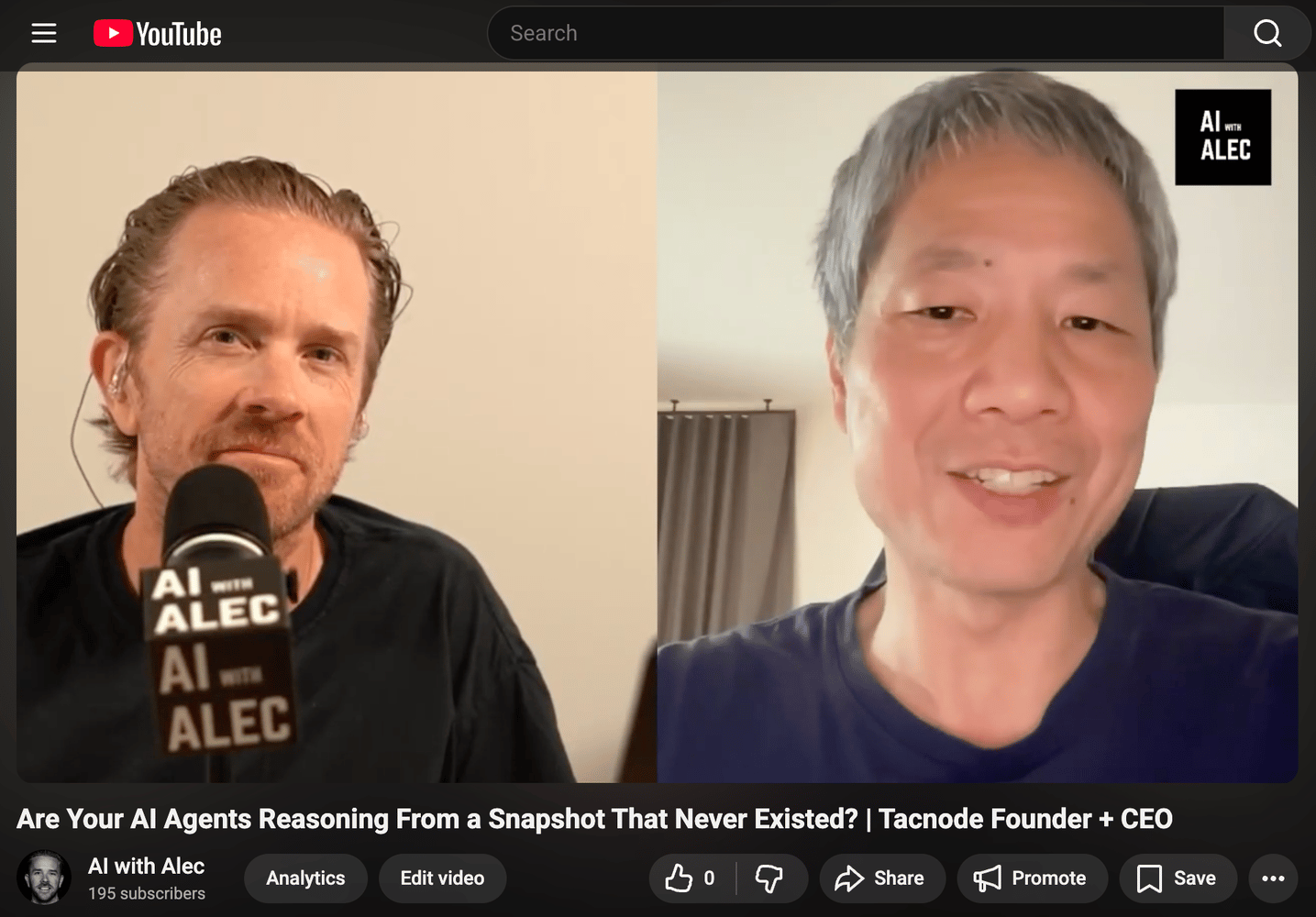
I interviewed Xiaowei Jiang, Tacnode founder + CEO on AI with Alec E31. What follows are four of his arguments that have stuck with me, worth weighing in your own context.
1: The primary user of enterprise software is shifting from humans to agents.
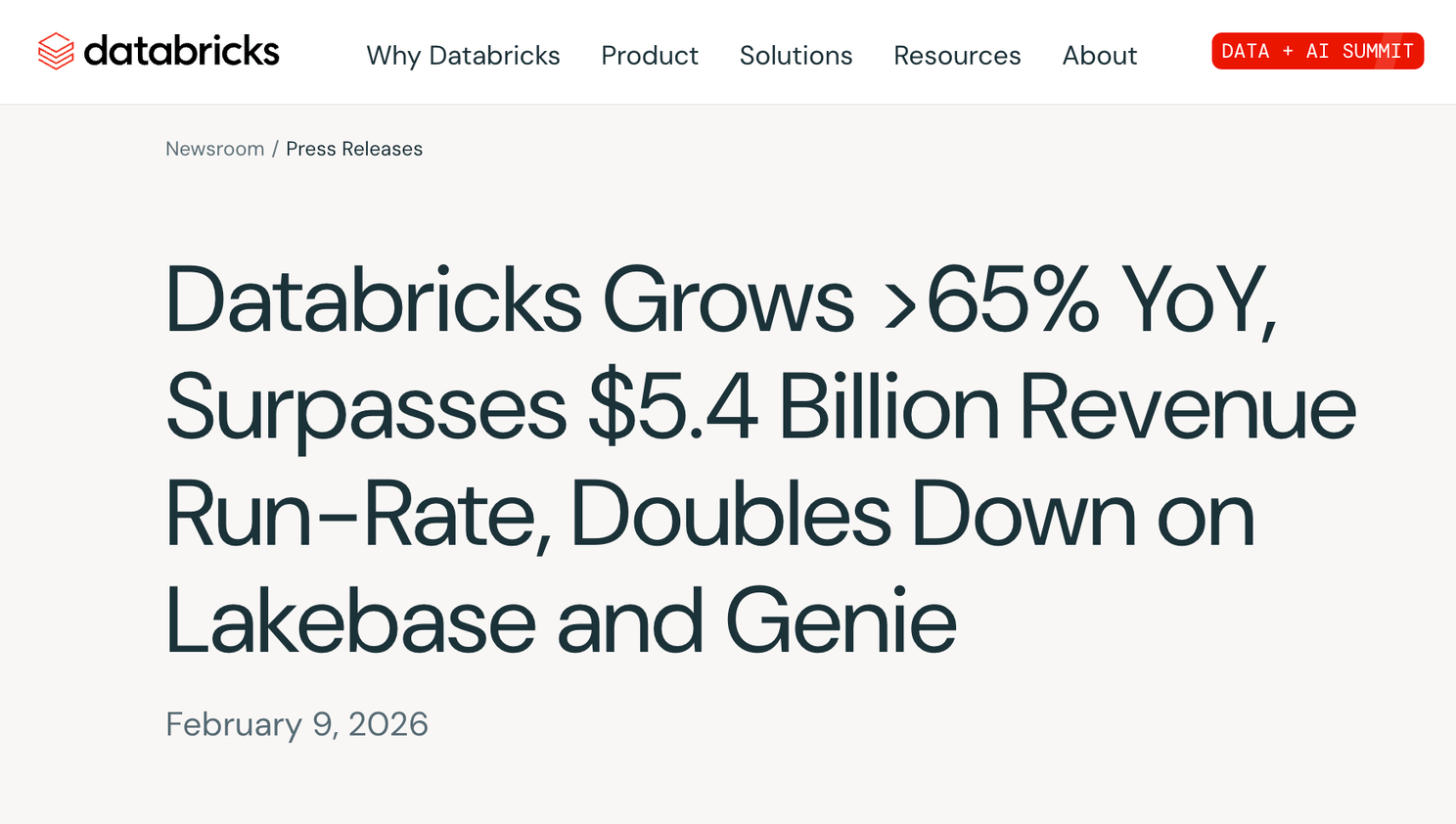
Databricks. $5.4B revenue run-rate. 65% YoY growth. $134B valuation. 60%+ of the Fortune 500. One of the most valuable private enterprise software companies in the world.
That's the bar.
In Xiaowei's view, lakehouse architecture became the standard because humans were the primary consumer of data. Databricks and Snowflake built extraordinary capabilities for the analytical workloads they were designed to serve.
But humans are slow. A handful of decisions a day with long gaps. Pipelines had time to catch up. Caches had time to refresh.
Agents collapse those assumptions. Thousands of decisions a second. No human in the loop. Zero tolerance for conflicting signals.
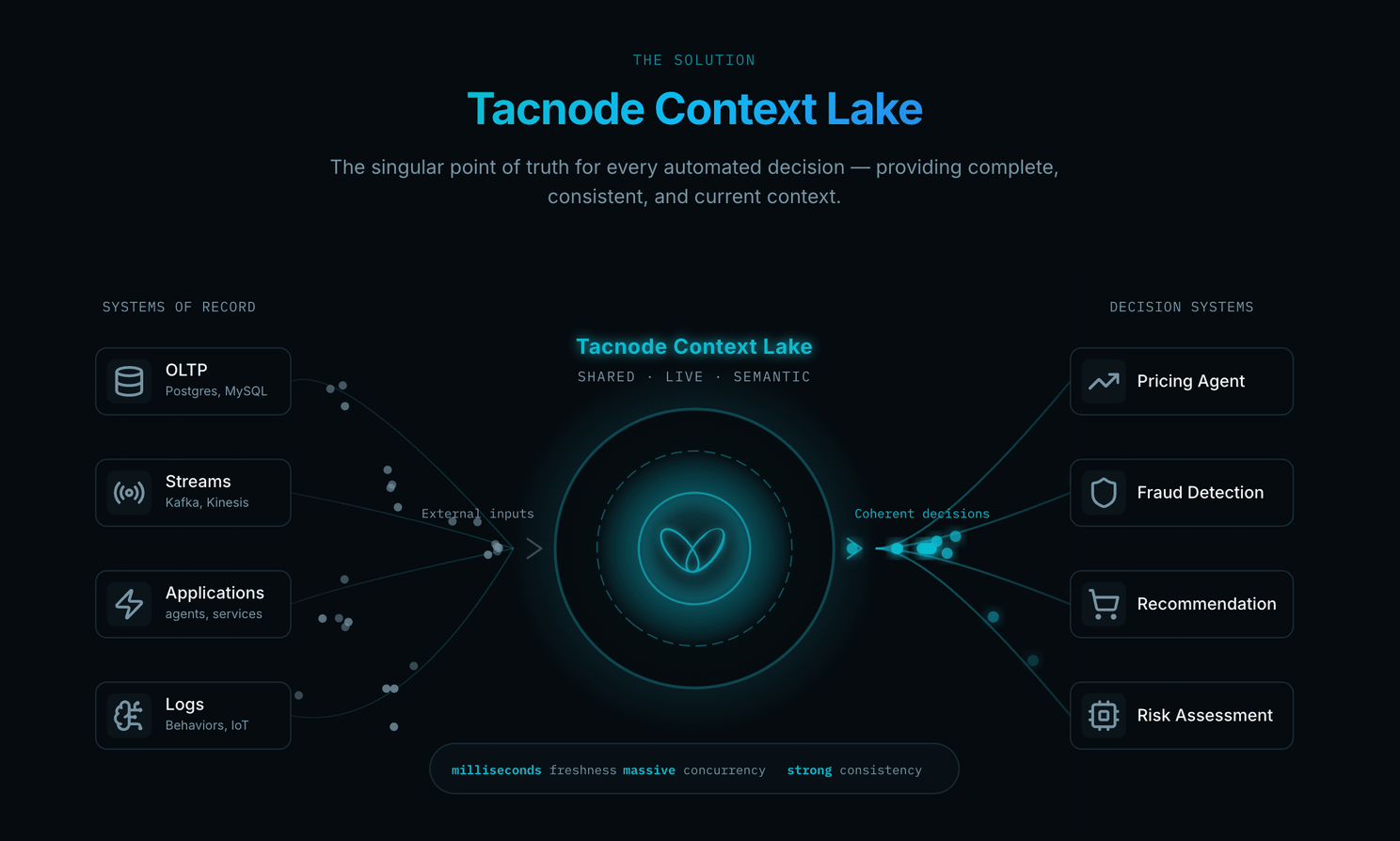
This isn't about replacing analytical platforms. Tacnode sits alongside the lakehouse, purpose-built for real-time agent decisions.
2: Most "AI failures" are not model failures. They are context failures.
Xiaowei broke it into three patterns. AI invents things when context is missing. AI contradicts itself when sources conflict. AI commits confidently to information that is no longer true.
The model is rarely the bottleneck. The pipeline behind it is.
When an agent reads account balance from one system, transaction velocity from another, and behavior signals from a third, each with its own lag, the model is reasoning from "a snapshot that never existed in the world."
In fraud detection and credit underwriting, that fictional snapshot shows up on the P&L.
3: The design starts with what must be true at decision time.
The intuitive approach is to wire together best-in-class components. A great stream processor. A great feature store. A great search engine.
Each one correct in isolation. The composite system is not.
Guarantees that hold inside one system erode the moment you cross to another.
Xiaowei's team inverted the design. Start with what must be true at decision time. Build everything else on top of that contract.
This is what first principles looks like below the waterline.
"If a database gives your application shared state, context lake is going to give agents shared memory in a compounding system."
Read that twice.
Every decision an agent makes generates a signal worth keeping. A fraud pattern. A predictive signal. A root cause.
In an isolated stack, that learning evaporates with the session. In a Context Lake, it becomes every other agent's capability. Instantly.
The early movers don't just deploy infrastructure. They accumulate institutional knowledge inside it.
"The cost of waiting is not linear. Every month you wait, the gap grows."
Early movers compound. Late movers start at zero.
Humans + Machines. Never Humans vs. Machines.