- AI with Alec Newsletter
- Posts
- AIWA "The One Thing" #14: Pioneering CEOs Have a Name for the AI Wall. The Org Chart.
AIWA "The One Thing" #14: Pioneering CEOs Have a Name for the AI Wall. The Org Chart.

Alec Coughlin
April 12, 2026
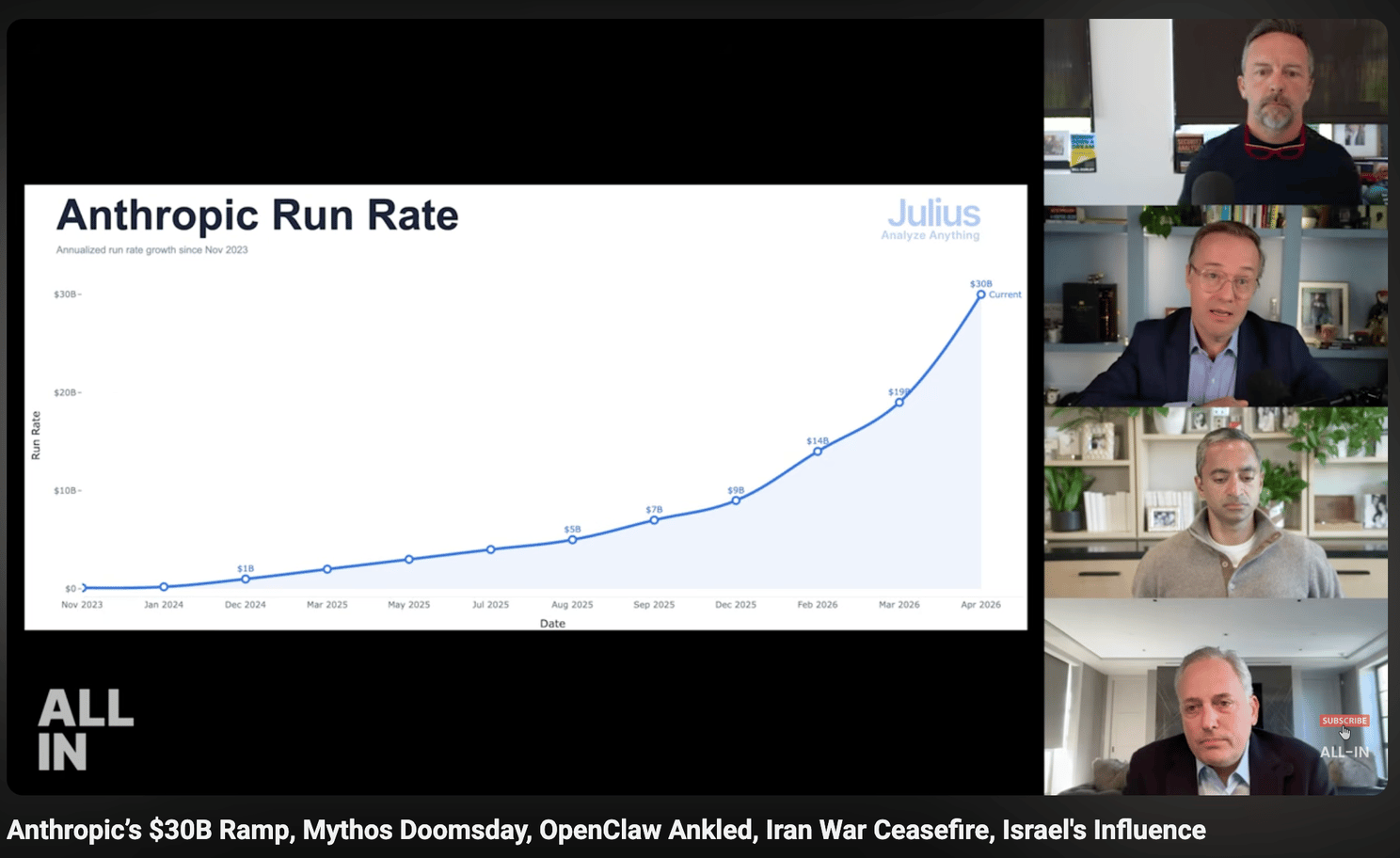
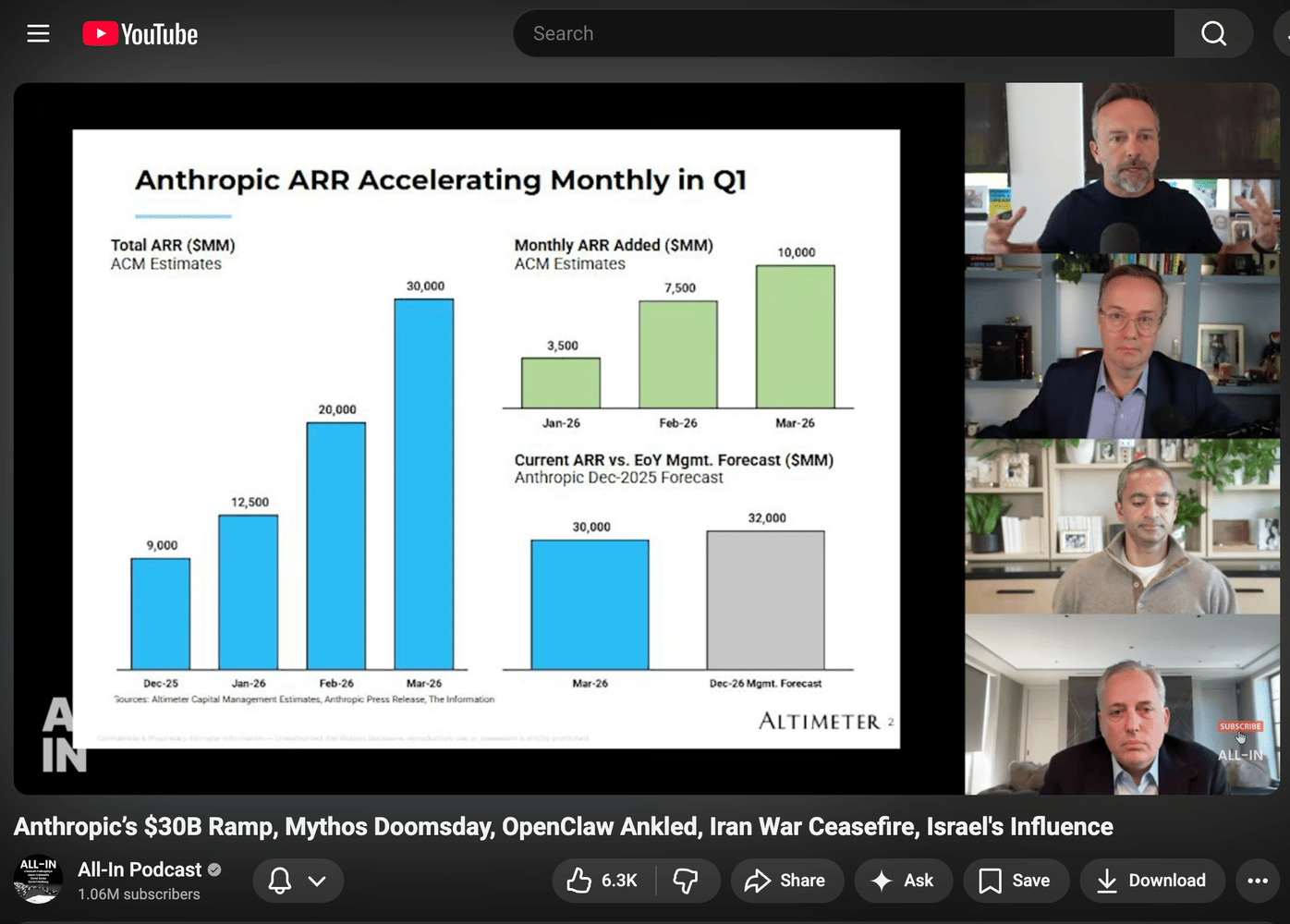
$4 billion in January. $7 billion in February. $10-11 billion in March.
Brad Gerstner, founder + CEO of Altimeter said it plainly on the All In Pod. That's Databricks plus Palantir Technologies combined, added in a single month.
Anthropic's run rate has now surpassed $30 billion. Over 1,000 business customers each spending more than $1 million per year, doubling in under two months.

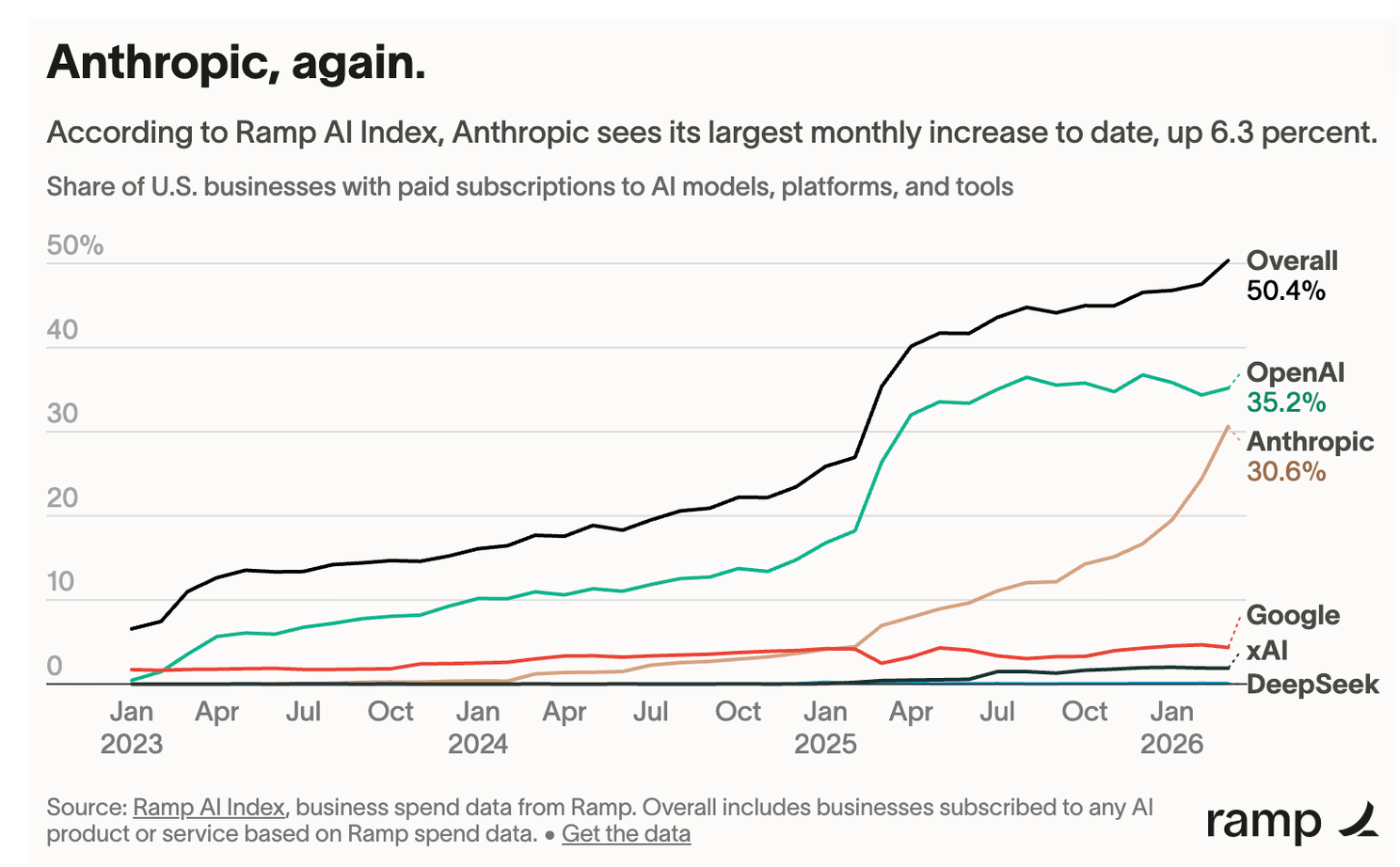
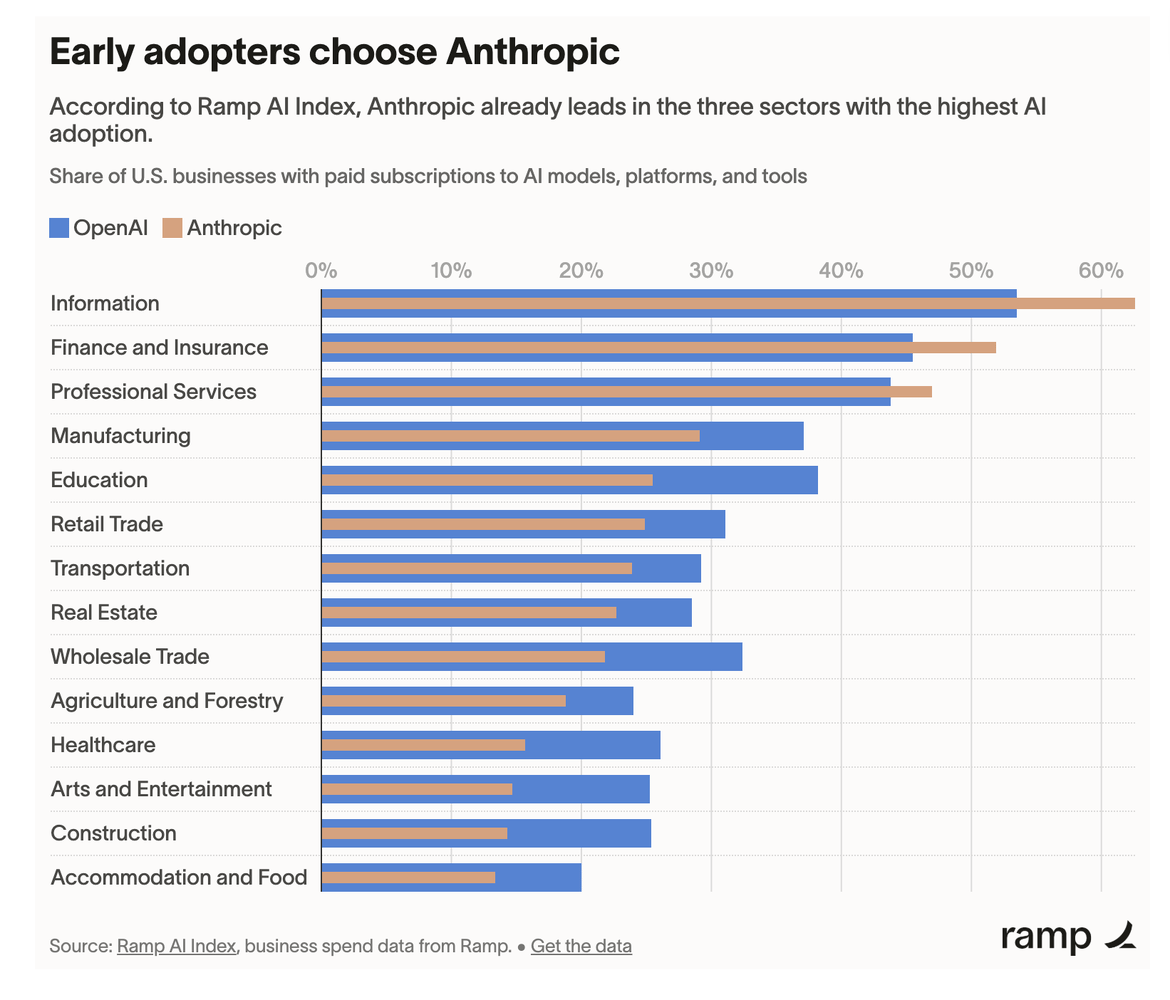
These numbers don't just prove that AI demand is real. They prove that the AI question has changed.
Enterprise leaders spent the last two years asking: what is our AI strategy?
That's no longer the question.
The new one: what is our company's strategy in an age of AI?
Those are not the same question. Not even close.
Henrik Werdelin said it plainly on AI with Alec E29.
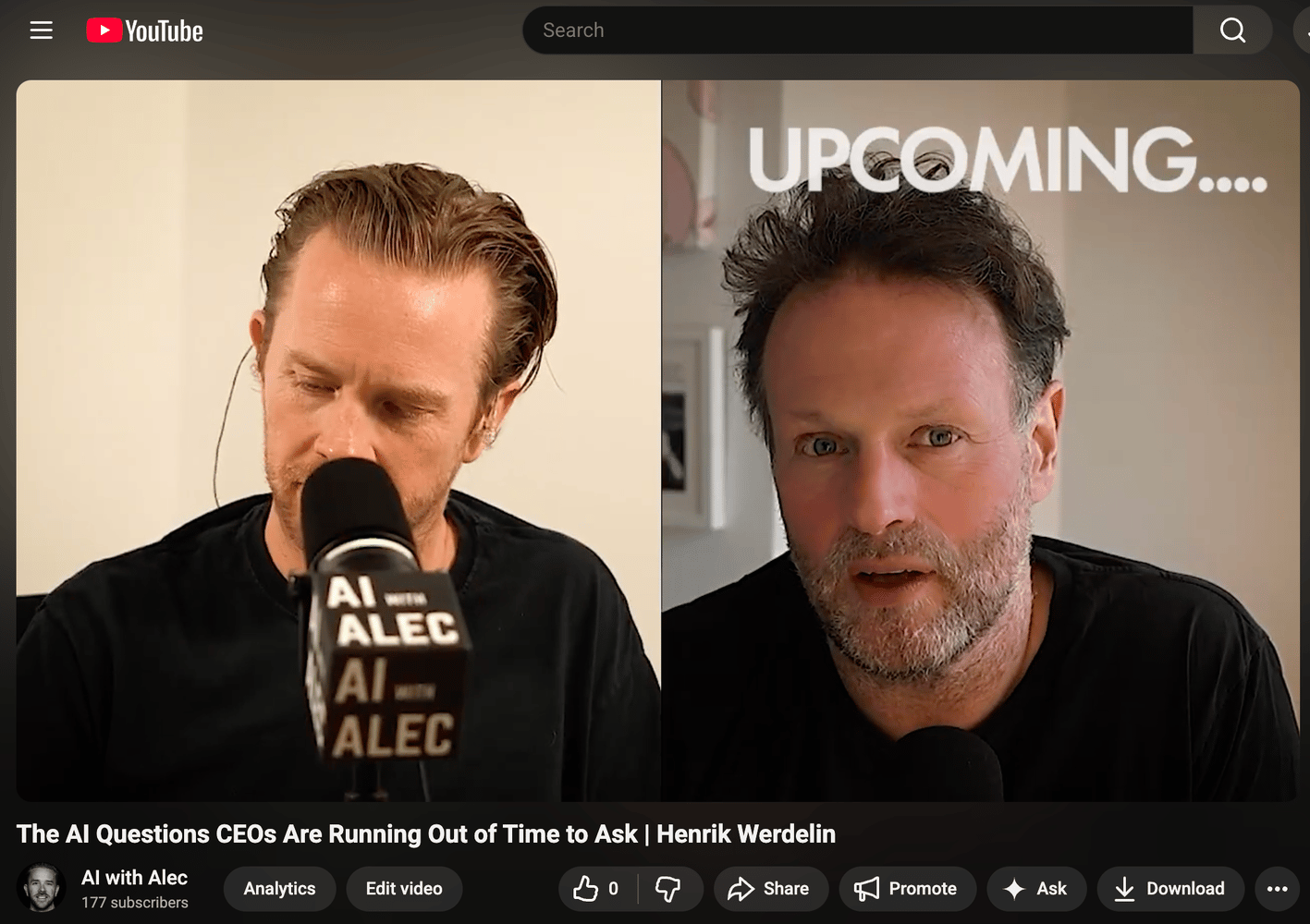
Most enterprise leaders are about to hit a wall they don't have language for yet. AI agents are going to free up enormous amounts of human energy inside organizations.
The question you can’t ask soon enough: what does your organizational design do with it?
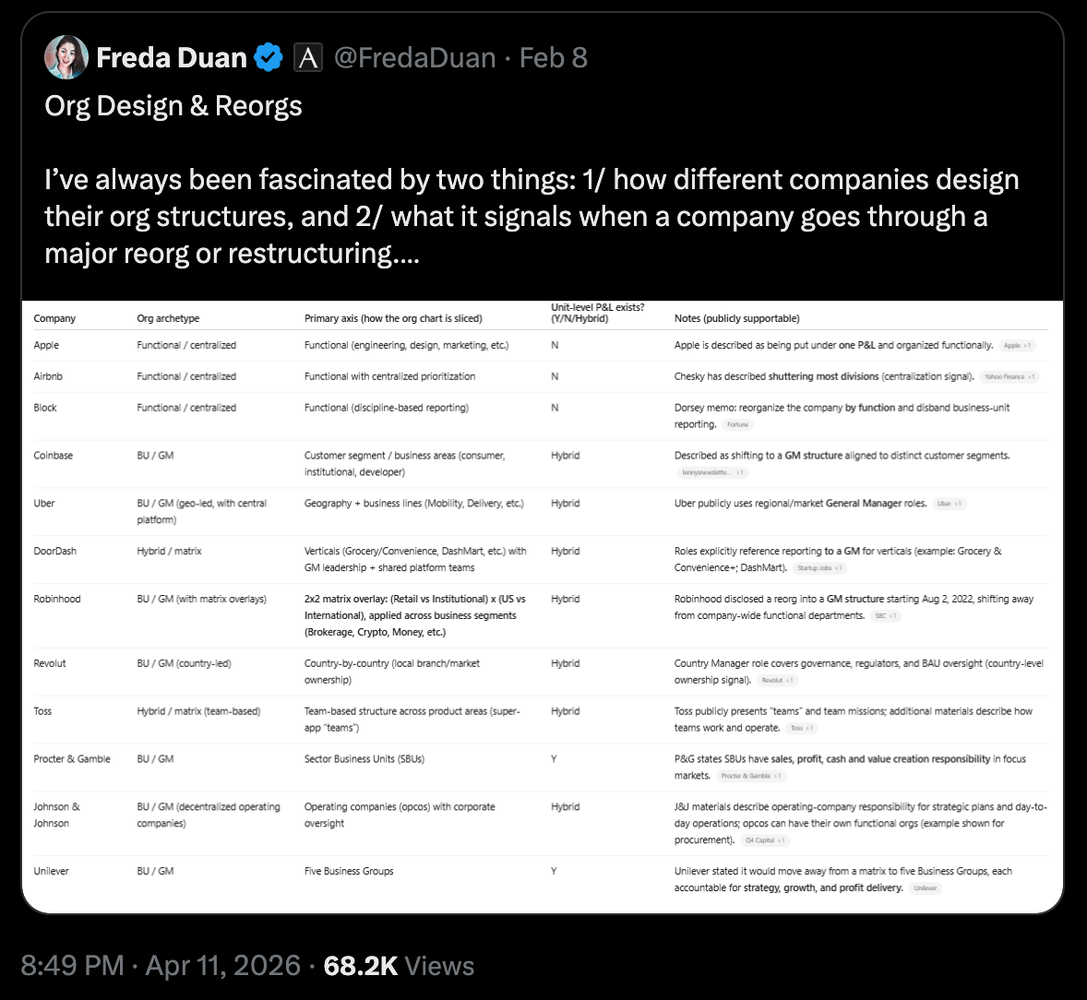
Altimeter's Freda Duan sharpened the diagnosis further. "Everyone is adding AI to their workflows. Almost no one is asking why the workflow looks that way in the first place."
That is the organizational design crisis in a single sentence.
Three things happening right now make this impossible to ignore.
When a financial sponsor's due diligence team, powered by AI-native tooling, built a competing prototype in two weeks that outperformed the acquisition target's own product, the deal died.
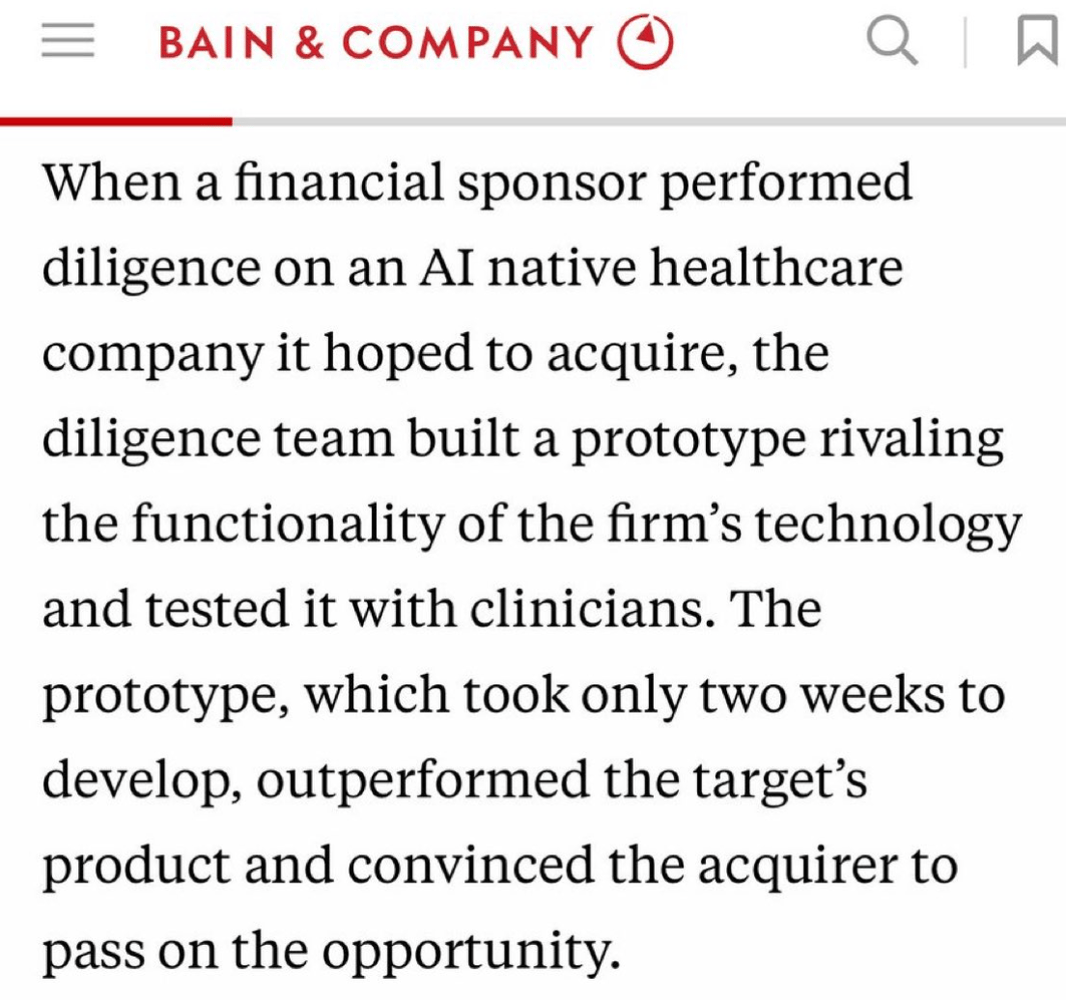
That is not a story about AI capability. It is a story about organizational design.
A small, fast, AI-enabled team replicated what a funded company built over years. The implications for how PE firms, product teams and engineering organizations are structured are only beginning to land.
When every B2B software company built for human users now has to evolve so AI agents can operate it, the redesign runs deeper than most product roadmaps account for.
Dharmesh Shah, HubSpot's CTO, framed it directly.
Dharmesh described being agentic is not just about agents running on their platform. It is about agents running their platform.
Headless, but not brainless.
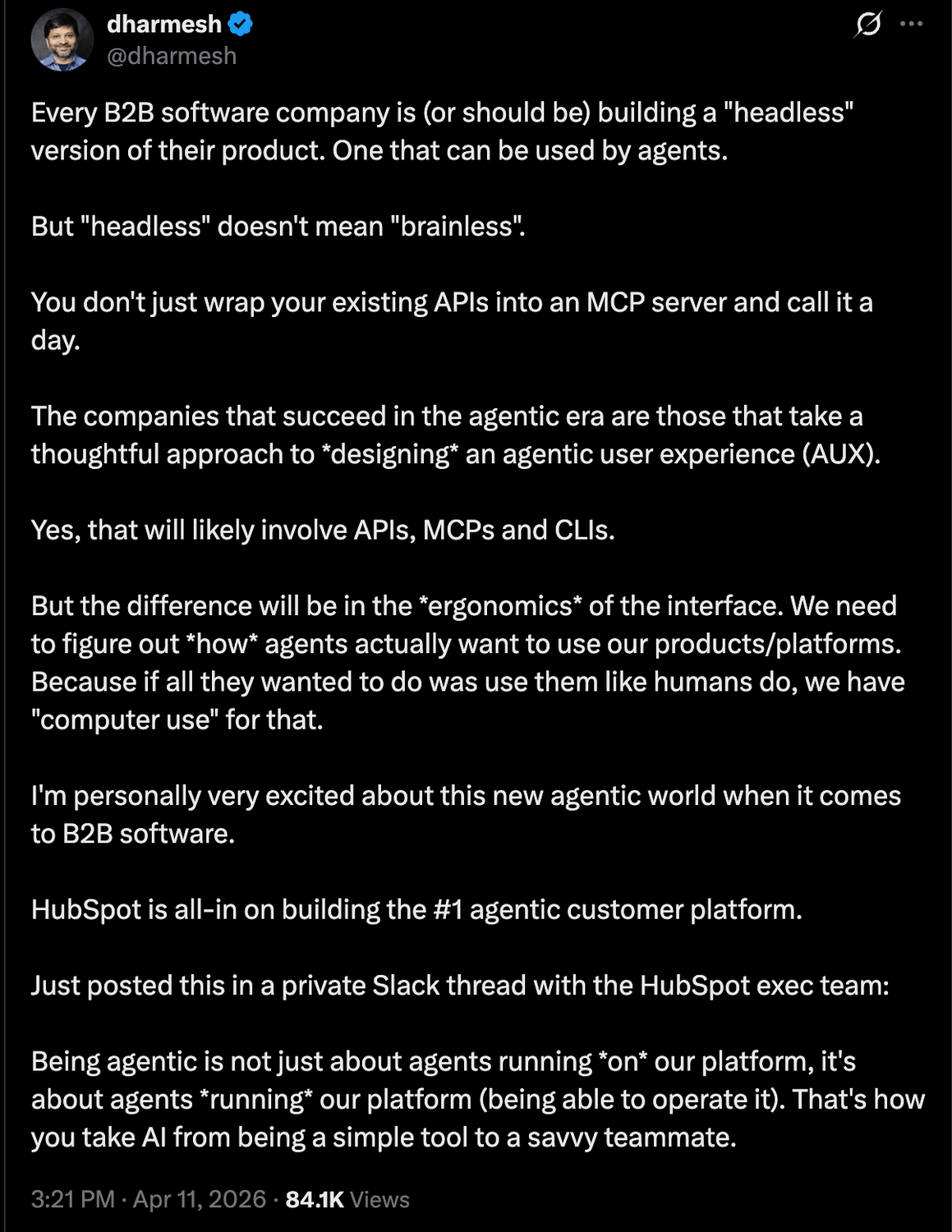
Every traditional SaaS company is staring at the same architectural and organizational question. And the market has already begun to reflect the pressure.
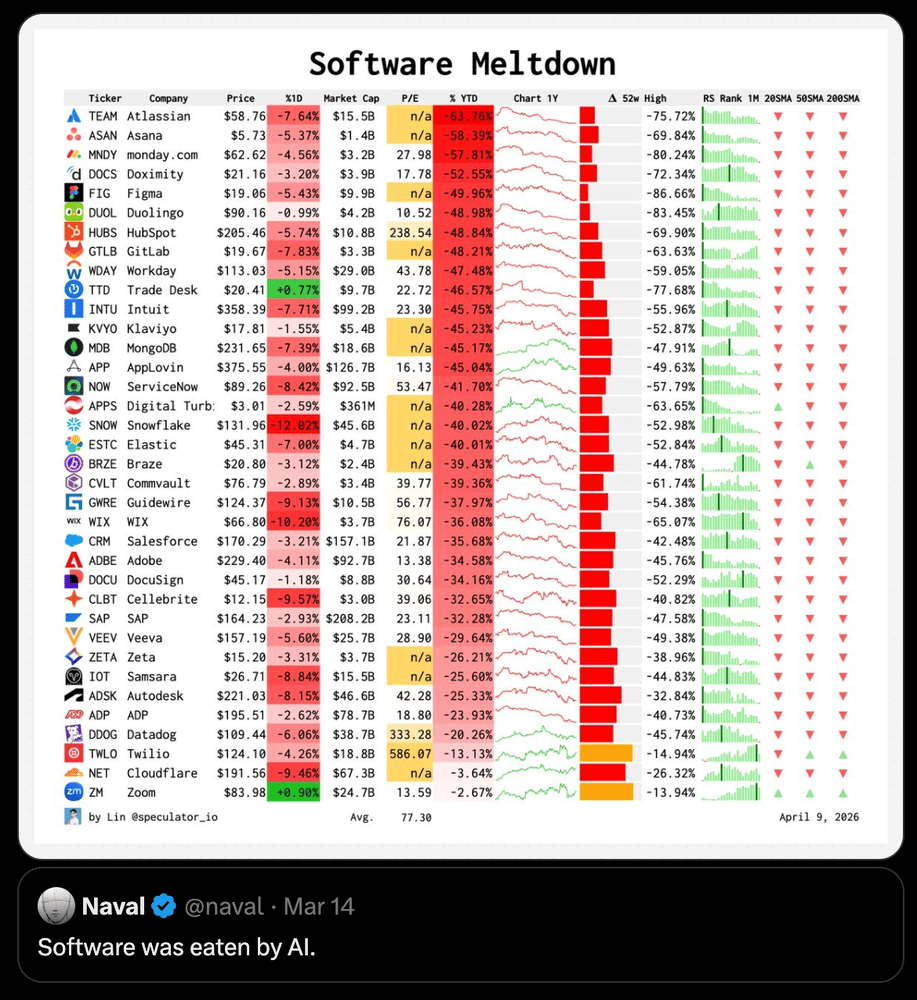
These are not isolated data points. They are three versions of the same signal.
Organizations designed for a world where humans operated every tool are now colliding head-on with a world where agents operate alongside them.
The workflows survived. The organizational logic underneath them?
That is where the harder work begins.
The companies that win will be the ones that answer Henrik's question first.
Not "how do we add AI to what we already do?" but "what does our organization look like when AI automates what we used to do and frees our people to do what only humans can?"
That answer requires investment below the waterline.
Clean, governed, real-time data. Unified pipelines. Scalable infrastructure. The unglamorous foundation that makes organizational redesign real rather than theoretical.
Without it, the most important conversation in the boardroom never reaches production.
The demand is already here. Thirty billion dollars of run rate proved it.
What separates the companies that compound from the ones that stall is what they build underneath the AI agents.
Humans + Machines. Never Humans vs. Machines.